Wavelength Division Multiplexing (WDM)
WDM is an acronym used for Wavelength Division Multiplexing. It is a technique in which signals of different wavelength are multiplexed together in order to get transmitted over an optical link.
WDM systems are divided into three different wavelength patterns: normal (WDM), coarse (CWDM) and dense (DWDM). Normal WDM (sometimes called BWDM) uses the two normal wavelengths 1310 and 1550 nm on one fiber. Coarse WDM provides up to 16 channels across multiple transmission windows of silica fibers. OverviewIn, wavelength-division multiplexing (WDM) is a technology which a number of signals onto a single by using different (i.e., colors) of. A WDM system uses a at the to join the several signals together and a at the to split them apart. With the right type of fiber, it is possible to have a device that does both s. Originally, the term coarse wavelength-division multiplexing (CWDM) was fa...
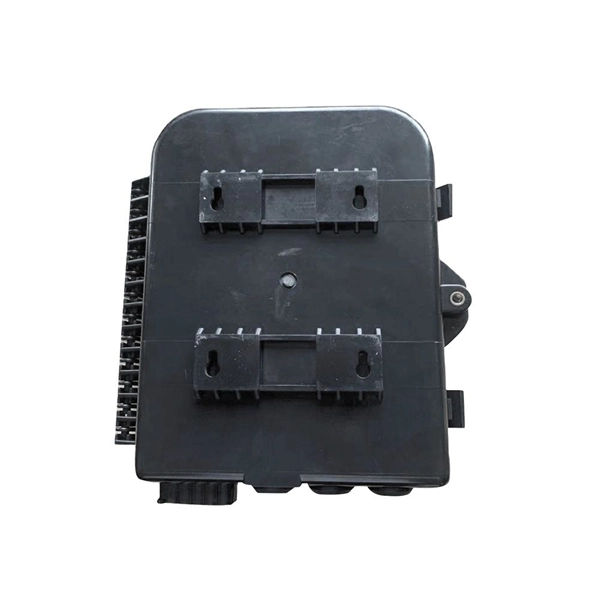
WDM is an acronym used for Wavelength Division Multiplexing. It is a technique in which signals of different wavelength are multiplexed together in order to get transmitted over an optical link.
Introduction to Wavelength Division Multiplexing (WDM) Wavelength Division Multiplexing (WDM) is a fiber optic transmission technique that
Wavelength Division Multiplexing (WDM) stands out as a cornerstone, enabling multiple data streams to travel simultaneously over a single fiber. This
Wavelength Division Multiplexing (WDM) is a technique in fiber-optic communication systems that enables multiple optical signals with different wavelengths to be combined, transmitted, and
5.1.2 Wavelength-division multiplexing and time-division multiplexing WDM systems can transport high numbers of different services simultaneously. However, cost-effective transport is only possible if the
Wavelength division multiplexing (WDM) is another way of increasing the bit-rate of soliton systems. That is, several frequency channels are used for solitons transmission.
Owing to the compact footprint of microring resonators (MRRs) and the enhanced interconnect efficiency enabled by wavelength division multiplexing (WDM), MRR-based photonic
Utilising two cascaded MZM-OEOs and triplet lenses for bidirectional WDM fibre-FSO communications marks an important milestone.
Light shunting is becoming increasingly popular as the bandwidth required for information transmission in people''s daily lives increases. The main subject of current information research is how to transmit
3. Wavelength Division Multiplexing Wavelength Division Multiplexing (WDM) is a multiplexing technology used to increase the capacity of optical fiber
Wavelength division multiplexing (WDM) is a technique of multiplexing multiple optical carrier signals through a single optical fiber channel by varying the
Wavelength Division Multiplexing (WDM) is a multiplexing and transmission scheme in fiber-optical telecommunications where different wavelengths, emitted by several lasers, each carry dedicated
WDM (Wavelength Division Multiplexing) technology is an ideal solution to get more bandwidth and lower cost in nowaday telecommunications
This paper discusses in detail the wavelength division multiplexing (WDM) technology, which effectively increases the communication capacity and transmission sp
ptical multiplexing techniques, wavelength division multiplexing (WDM). The chapter begins with a quick historical account of the origin of optical communication and its exponential growth following the
However, developments in optoelectronic components have made it can be to create systems that simultaneously transmit various light wavelengths
Wavelength-division multiplexing (WDM) Multiple communications channels are consolidated and then transmitted on lightwaves with different
Introduction to Coarse Wavelength Division Multiplexing (CWDM) Systems in the FTTx Access Space AEN106, Revision 2 In today''s competitive Broadband Access FTTx landscape, system operators
Wavelength Division Multiplexing (WDM) in fiber optics has revolutionized the way data is transmitted and has become an integral part of
Wavelength Division Multiplexing (WDM) Abstract Wavelength division multiplexing or WDM allows the combining of a number of independent information-carrying wavelengths onto the same fiber,
Wavelength Division Multiplexing (WDM) is a technique in optical communication that allows multiple data signals to be transmitted simultaneously
Multiplexing was developed in the early 1870s, but it''s become much more applicable to digital telecommunications in the late 20th century. Today,
Wavelength division multiplexing or WDM allows the combining of a number of independent information-carrying wavelengths onto the same fiber, because of the wide spectral
With dense wavelength division multiplexing (DWDM) forty or more wavelengths can share a single fibre. A number of different technologies have been developed for multiplexing and demultiplexing
Wavelength Division Multiplexing (WDM) is a technology that increases the bandwidth of existing fibre optic networks. We explain the different
At MEETOPTICS, you can find and compare Wavelength Division Multiplexers (WDMs) for combining or splitting light at two different wavelengths. MEETOPTICS offers a variety of multiplexers with
CWDM (Coarse Wavelength Division Multiplexing): Other kind of WDM is CWDM is a two-way communication technology where the term ''Coarse'' denotes a wider spacing of 20nm
Wavelength Division Multiplexing has revolutionized the way we transmit data through fiber optic networks. By enabling multiple data streams to
Discover the comprehensive guide to Wavelength Division Multiplexing, its role in optical properties, and its significance in modern telecommunications.
Our photonic engineering team can help you select the right connector or splitter for your network.