What is Wavelength Division Multiplexing (WDM): A Technical Guide
Introduction to Wavelength Division Multiplexing (WDM) Wavelength Division Multiplexing (WDM) is a fiber optic
The P-end, often referred to as the multiplexer (MUX) input, is responsible for combining multiple optical signals from different sources or transponders, each operating at a distinct wavelength, into a single optical fiber. This allows simultaneous transmission of multiple data channels over one fiber, significantly increasing the fiber's capacity without interference between channels .
At the P-end, each optical signal is generated by a laser source or transponder at a specific wavelength. The multiplexer aligns these signals into a single fiber while maintaining low insertion loss and minimal crosstalk to preserve signal quality . The combined signal is then transmitted over the fiber to the receiving end (DEMUX), where it is separated back into individual wavelengths for processing.
The P-end of a WDM system is critical for efficient optical signal combination, enabling high-capacity, multi-channel fiber-optic communication. Proper selection of channel spacing, connector type, and environmental specifications ensures optimal performance and minimal signal degradation during transmission .
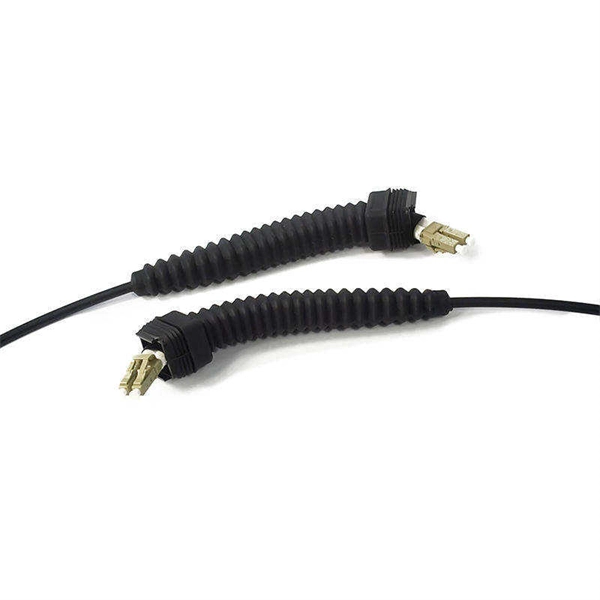
Introduction to Wavelength Division Multiplexing (WDM) Wavelength Division Multiplexing (WDM) is a fiber optic
Here we propose a scalable on-chip parallel IM-DD data transmission system enabled by a single-soliton Kerr
In WDM, the optical signals from different sources or (transponders) are combined by a multiplexer, which is essentially an optical
WDM Multiplexers and Demultiplexers combine and separate different wavelengths (colors) of light signals
Here, we develop a novel design approach that co-optimizes inverse-designed wavelength division multiplexers and
At MEETOPTICS, you can find and compare Wavelength Division Multiplexers (WDMs) for combining or splitting light at two different
3.5 Wavelength multiplexing and demultiplexing Wavelength multiplexers and demultiplexers are needed in order to be able to use
Wavelength Division Multiplexers: 980 nm / 1060 nm Figure G1.1 The housings of these WDMs are
This introductory chapter of Wavelength Division Multiplexing: A Practical Engineering Guide traces the history of wavelength division
Wavelength division multiplexing (WDM) multiplies fiber capacity with up to 80 channels on one fiber. Learn how the key components
At the transmitting end there are several independently modulated light sources, each
This example shows the basic operation of a wavelength division multiplexer (WDM) with only one channel. This example uses the
††jela@stanford Abstract Wavelength division multiplexers are fundamental to the functioning and performance of integrated
BST-OFDM used in ISDB The band-segmented transmission orthogonal frequency-division multiplexing (BST-OFDM) system
This ushered in the need of multiplexers, specifically wavelength division multiplexers. A few popular optical
Wavelength division multiplexing (WDM) is a technology for increasing the transmission capacity of optical
Wavelength Division Multiplexer and Demultiplexer Unit (ODU / OMU) Wavelength Division multiplexer can be divided
Wavelength Division Multiplexing (WDM) is defined as an approach that multiplexes multiple wavelength channels from different end
What is WDM or DWDM? Wavelength Division Multiplexing (WDM) is a fiber-optic transmission technique that enables the use of
Summary This introductory chapter of Wavelength Division Multiplexing: A Practical Engineering Guide traces the
As the name implies, Dense Wavelength Division Multiplexing (DWDM) offers even more density with 40 or 80
Wavelength Division Multiplexing (WDM) is a technique in fiber-optic communication systems that enables multiple optical signals
How To Select Wavelength Division Multiplexers Image Credit: Microwave Photonic Systems Inc. Wavelength division multiplexers
Dense Wavelength Division Multiplexing (DWDM) is defined as a method that multiplexes many wavelength channels into a single
Wavelength Division Multiplexing (WDM) is a technology found in fiber optic communications. WDM uses a single fiber to transmit
Here, we develop a novel design approach that co-optimizes inverse-designed wavelength division multiplexers and distributed
WDM increases transmission capacity per fiber WDM is an abbreviation for Wavelength-Division Multiplexing, and is
Here a wavelength multiplexer is needed to combine these optical outputs into a continuous spectrum of signals and couple them
Our photonic engineering team can help you select the right connector or splitter for your network.