Fiber to the Antenna (FTTA)
Fiber-to-the-antenna (FTTA) is a wireless site architecture where optical fiber is run all the way up the tower to replace much of what was traditionally completed with heavier coax cabling.
The AAU connects to the baseband unit (BBU) or distributed unit (DU) via high-speed fiber optic interfaces using protocols like Common Public Radio Interface (CPRI) or enhanced CPRI (eCPRI), which carry digitized baseband signals between the processing unit and the radio unit. - Connectivity: - Connected to the RRU or AAU via fiber optic cables (CPRI or eCPRI interfaces). - Key Features: - Centralized processing for multiple radio units. - Scalable and upgradable to support new technologies like 5G. *RRU (Remote Radio Unit) - Function: - Converts digital baseband signals. Development status of optical cable for RRU/AAU connection The BBU/DU and RRU/AAU of the base station need to be connecte...
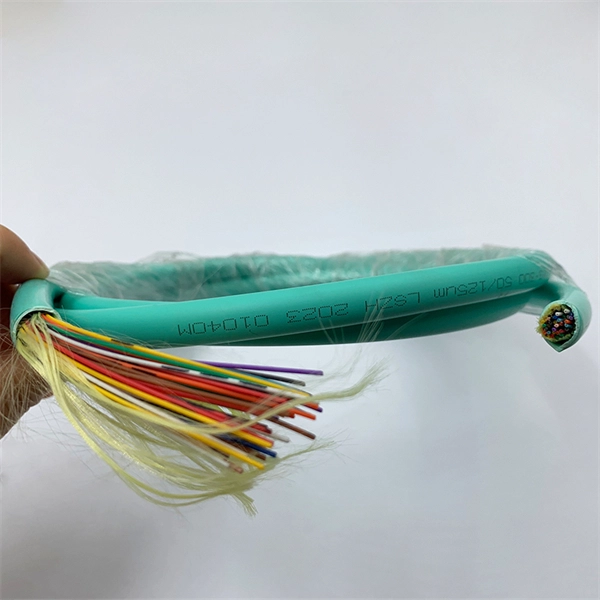
Fiber-to-the-antenna (FTTA) is a wireless site architecture where optical fiber is run all the way up the tower to replace much of what was traditionally completed with heavier coax cabling.
PON stands for Passive Optical Network in fiber-optic communication. What is it? A PON is a point-to-multipoint network architecture that uses fiber-optic cables to deliver data from a central office (CO)
The installation of an OSP fiber optic cable is conventional, underground, direct buried or aerial to the tower and terminated at the base using the hardware for
The cellular network infrastructure consists of various components that work together to provide wireless communication. Here''s the sequence of
Supports 5G features like massive MIMO and beamforming. Mounted directly on towers or rooftops. Connects to the BBU via fiber optic cables.
Connected to the RRU or AAU via fiber optic cables. RRU (Remote Radio Unit) Converts digital signals from the BBU into radio signals and vice versa. Mounted
The analog electrical signal is converted to optical form and transmitted via fiber optic cables to the BBU (Baseband Unit). At the baseband unit, physical layer
The document describes the components and installation procedure for a 5G network, including an AAU5639w antenna, 5900 BBU, UBBPg3, external GPS antenna system, SFP and fiber cables,
- Connectivity: - Connected to the BBU via fiber optic cables. - Key Features: - Eliminates the need for separate RRUs and antennas, simplifying deployment.
While a number of different system designs have been deployed, FTTA cabling architectures generally consist of a smaller base band unit (BBU) at the bottom of the tower and multiple fiber-fed remote
Click to see what Fios options are available at your business location. Fiber-optic technology offers incredible upload speeds that are faster than traditional cable
- Connectivity: - Connected to the BBU via fiber optic cables. - Key Features: - Eliminates the need for separate RRUs and antennas, simplifying deployment.
Feature Cable using spiral metal armored tube with best crush property, and cable is very flexible and easy bend. It has greater durability in resisting pulls, strains and impacts from cabling installation.
All in all, compared with RRU, AAU has more functions of antenna and some functions of BBU. Compared with RRU, AAU is larger in size, larger in
The RRH/AAU receives the RF signal, downconverts it to baseband, and converts it to a digital signal. This digital signal is sent to the BBU over the fiber link. The BBU performs
Field optical cables meet these requirements well, so field optical cables are widely used for connection between base station BBU/DU and RRU/AAU. The connection between the antenna
Instead of thick copper cables, the AAU connects to the ground using a single, microscopic Fiber-Optic Cable (CPRI/eCPRI). The fiber shoots pure digital light up the tower.
After the signal has passed through your firewall, the Ethernet cable carries the signal to the network interface card (NIC) plugged into your computer. When your computer sends data over the internet,
Single-Mode vs Multi-Mode Fiber Optic & SFP Modules – Know the Difference 🔹Choosing the right fiber optic cable and SFP module is critical for building reliable and scalable networks.
Fiber Optic Connectivity: The AAU is connected to the core network through fiber optic cables. This high-speed and low-latency connection is crucial
The AAU connects to the baseband unit (BBU) or distributed unit (DU) via high-speed fiber optic interfaces using protocols like Common Public Radio Interface (CPRI) or enhanced CPRI (eCPRI),
This hybrid cable is widely used to connect BBU to RRU / AAU units on 4G & 5G base stations. The optical fibers ensure stable high-speed fronthaul communication, while insulated copper conductors
Our photonic engineering team can help you select the right connector or splitter for your network.