AI Infrastructure: Key Components and 6 Factors Driving Success
AI infrastructure refers to the combination of hardware and software components designed specifically to support artificial intelligence
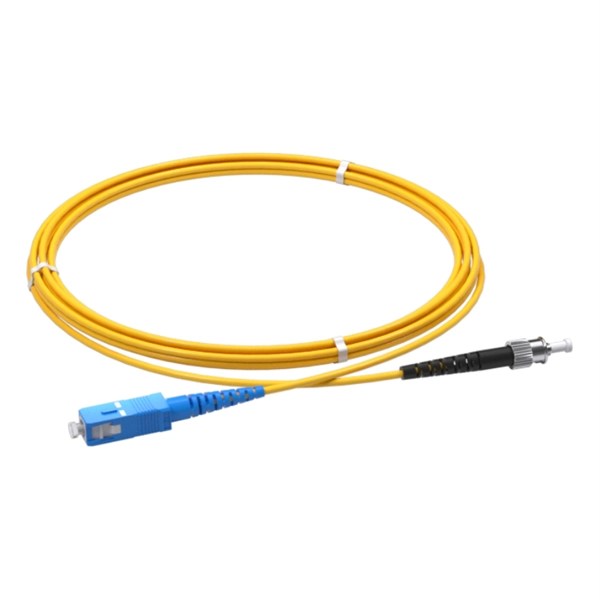
1. Cooling and Thermal Management AI servers generate significant heat due to dense GPU and CPU workloads. Peripheral cooling modules include front fan arrays, liquid cooling loops, and thermal interface materials to maintain optimal operating temperatures and prevent throttling or hardware damage . High-end systems like NVIDIA DGX A100 use eight-fan front modules in 8U chassis arrangements to ensure airflow across GPUs and memory modules . 2. Storage and Front Control Boards Peripheral storage includes NVMe SSDs, HDDs, and hybrid storage tiers. AI servers often integrate tiered storage combining high-bandwidth memory (HBM), DDR5/LPDDR5, and SSDs for performance and cost efficiency . The front control board manages device signaling, drive monitoring, and external interface control, ensuring smooth communication between storage and compute units . 3. Power Supply Units (PSUs) AI servers require high-density power delivery. Peripheral power modules include redundant PSUs, high-voltage DC architectures (48V/800V), and power conversion devices such as SiC and GaN transistors . These units are often located at the rear lower section of the chassis and use thick-copper PCBs to handle high currents safely . 4. Networking and Interconnects Peripheral networking components include NICs, PCIe/CXL switches, InfiniBand or Ethernet adapters, and optical transceivers. These modules enable high-speed data transfer between GPUs, CPUs, and storage, as well as across server clusters for distributed AI workloads . Rack-scale AI servers integrate these interconnects to form a cohesive compute domain. 5. Auxiliary Modules and Monitoring Other peripheral components include baseboard management controllers (BMCs), timing devices, passive components, and monitoring sensors. These modules support system reliability, fault detection, and remote management, ensuring continuous operation under heavy AI workloads .
Peripheral components in AI servers are not standalone; they are tightly integrated with the GPU and CPU assemblies. Cooling, power, storage, and networking modules collectively ensure that compute-intensive AI tasks—such as large language model training or real-time inference—can run efficiently without bottlenecks . The synergy of these peripherals underpins the high reliability, scalability, and performance of modern AI computing infrastructure. In summary, the peripheral structural components of AI servers include cooling systems, storage arrays, power modules, networking interfaces, and auxiliary monitoring boards, all of which are essential to support the extreme computational demands of AI workloads .
AI infrastructure refers to the combination of hardware and software components designed specifically to support artificial intelligence
Discover AI server architecture, including hardware and software components. Learn to optimize dedicated hosting
An AI server PCB is a printed circuit board specifically designed to support the high-performance computing
This updated guide explains the key electronic components inside AI servers and accelerator cards, how their
Discover essential insights on AI infrastructure to efficiently support your AI applications and drive innovation in your business.
Whether you''re deploying AI in your business, tinkering with a project, or just want to understand the tech shaping our
AI servers are strategically architected from AI hardware components to support AI workloads from edge to cloud. Critical elements
Learn what AI servers are and how they power artificial intelligence. Complete guide to AI server components,
The server chassis is the physical enclosure that houses all your components. For dedicated AI servers, its role extends far past
AI hardware refers to specific devices and components that facilitate complex AI processes in client, edge, data center, and cloud
As mentioned, servers require some form of internal interconnect system for high-speed data transfer. This tends to
Discover the 7 key components of AI data center infrastructure, including GPUs, networking, storage, cooling, and scalable power
Learn which hardware components power AI servers, including CPUs, GPUs, memory, storage, networking, and accelerators.
From a functional perspective, PCB value in an AI server can be grouped into three parts: the GPU board assembly,
Server hardware architecture Like a PC, the key components of server hardware architecture include the
Learn how AI workloads are reshaping server architecture with accelerators, CXL memory pooling, high-speed
When it comes to understanding how a server functions, it''s crucial to delve into the
From liquid cooling to 300 MW+ campuses, AI has transformed data center design. Get an inside look at what modern AI
GPU servers integrate multiple graphics processors within a server framework, creating powerful computing clusters
Learn what AI infrastructure is and why it''s essential for modern AI development. Explore core components,
Understanding those differences is essential for anyone involved in designing, manufacturing, or procuring the printed circuit boards
Scope For the purposes of this article, AI hardware refers to computing components and systems
Servers are complex systems that comprise numerous parts. Learn more about the essential hardware components of a server: 1.
An AI server is a purpose-built computing system optimized for the unique demands of machine learning workloads—demands that
To achieve this level of performance, AI servers rely on several specialized hardware components working together
Our photonic engineering team can help you select the right connector or splitter for your network.